
- What are the 7 rules of flag etiquette
- Rules of email etiquette
- The unwritten rules of professional etiquette
Club purchase that comes with rules of etiquette
In the professional world, success often hinges not only on skills and qualifications but also on the ability to navigate social interactions effectively https://activepatience.com/the-croupier-s-job-is-a-profession-or-a-way-of-life/. Workplace etiquette, therefore, plays a crucial role in creating a positive and productive environment. From communicating respectfully to fostering a culture of inclusivity, adhering to proper etiquette can enhance professional relationships, boost morale, and contribute to overall organizational success.
Now flip that: what happens when those behaviors are missing? You get tone-deaf emails, eye-rolls in meetings, skipped greetings, and awkward interactions that quietly chip away at your company culture. And let’s face it HR is the one left cleaning up the mess.
Workplace etiquette is more than just common courtesy — it’s the glue that holds teams together. It shapes how employees interact, resolve conflict, represent the organization, and contribute to a collaborative culture. In today’s hybrid and often global workplaces, it’s essential to incorporate workplace etiquette into employee training and development.
Workplace etiquette encompasses a set of unwritten rules and social norms that govern behavior and interactions within a professional setting. While specific customs may vary across industries and cultures, certain principles of etiquette remain universally applicable. These principles revolve around respect, courtesy, professionalism, and effective communication.
What are the 7 rules of flag etiquette
(h) When the flag of the United States is displayed from a staff projecting horizontally or at an angle from the window sill, balcony, or front of a building, the union of the flag should be placed at the peak of the staff unless the flag is at half staff.When the flag is suspended over a sidewalk from a rope extending from a house to a pole at the edge of the sidewalk, the flag should be hoisted out, union first, from the building.
(e) The flag of the United States of America should be at the center and at the highest point of the group when a number of flags of States or localities or pennants of societies are grouped and displayed from staffs.
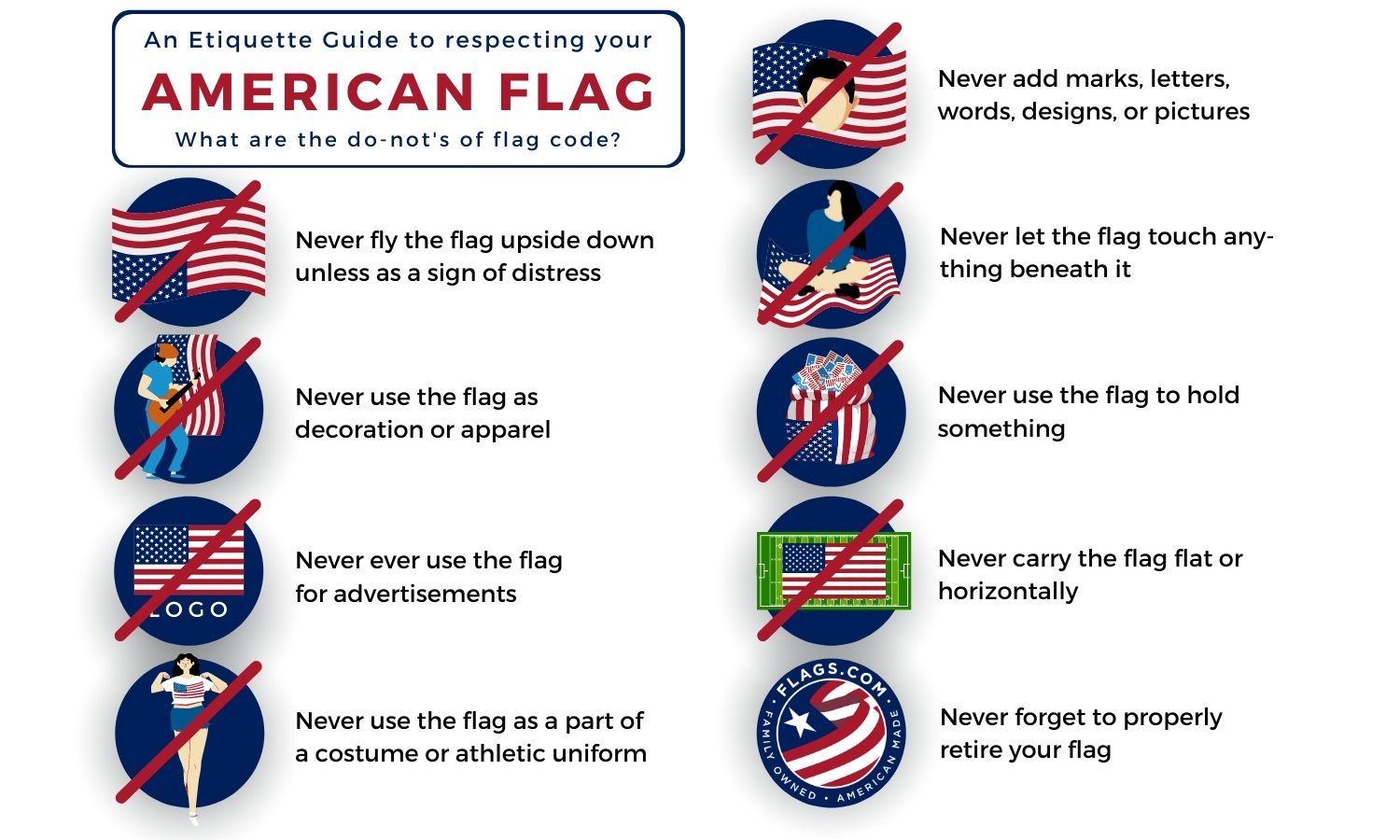
The “don’ts” around the Star-Spangled Banner are really about paying it the respect it deserves. In fact, according to U.S. Flag Code, “The flag represents a living country and is itself considered a living thing.” Honor the flag and treat it with dignity every time you handle or display it, and chances are you’ll be right in line with regulations. But here are some guidelines to keep in mind:
(h) When the flag of the United States is displayed from a staff projecting horizontally or at an angle from the window sill, balcony, or front of a building, the union of the flag should be placed at the peak of the staff unless the flag is at half staff.When the flag is suspended over a sidewalk from a rope extending from a house to a pole at the edge of the sidewalk, the flag should be hoisted out, union first, from the building.
(e) The flag of the United States of America should be at the center and at the highest point of the group when a number of flags of States or localities or pennants of societies are grouped and displayed from staffs.
The “don’ts” around the Star-Spangled Banner are really about paying it the respect it deserves. In fact, according to U.S. Flag Code, “The flag represents a living country and is itself considered a living thing.” Honor the flag and treat it with dignity every time you handle or display it, and chances are you’ll be right in line with regulations. But here are some guidelines to keep in mind:
Rules of email etiquette
Maintaining good email etiquette is important because it communicates respect for the people you email. At its core, etiquette represents consideration for others. Through email etiquette, you communicate your professionalism as well as your company’s professionalism, if applicable. In a recipient’s inbox, this can make you and your company stand out positively. Email etiquette also allows you to send and respond to emails more efficiently. Below are 19 email etiquette guidelines that can help you write clearer, more professional emails that lead to more productive outcomes.
Email etiquette is the set of social guidelines that govern polite, productive email communication. As with offline etiquette, email etiquette serves to make conversations comfortable, considerate, and professional.
When multiple people are copied on an email, you can hit reply-all to send your response to all of them. Unless there’s a reason to do this, such as sharing critical information they all need to know, don’t hit reply-all. Instead, reply to the email’s sender individually so you don’t spam others’ inboxes with a conversation that doesn’t directly involve them.
The unwritten rules of professional etiquette
Do you want to stand out as exceptional in school? Did you know that you need more than just good grades to build a positive reputation among your faculty? A truly professional demeanor will give you access to a competitive edge, yet there are many unwritten expectations that—if you are not aware of them—can jeopardize your reputation. The Unwritten Rules of Professional Etiquette gives you an honest account of the ways faculty silently judge students without pulling any punches. With this straightforward advice you can sidestep the hidden graduate school pitfalls and emerge at the top of your class. Covering topics such as excelling in interviews, responding to constructive feedback, and dealing with difficult faculty, this compendium is an essential resource for navigating the complex world of academic relationships. While this is an indispensable handbook for graduate students, undergrads practicing this advice will be truly outstanding.
The people in your program who have evaluative power or authority are the ones who will most directly judge your professionalism. Because of this, I use terms such as professor, faculty member, instructor, supervisor, and advisor somewhat interchangeably; teaching assistants and other senior students may also at times fill teaching or advising roles. It cannot be overstated that how you behave around staff as well as peers also shapes your professional reputation. For example, when a student is rude to our administrative assistant, the faculty hears about it. When students come forward with a concern about the behavior of one of their peers, the faculty will investigate. All of this protects the profession.
Because it is difficult to define professionalism in an exhaustive way for every situation, some programs may not have venues for teaching it directly. Does your program give you a course in professional development? Are you referred to any books on the topic? Do you have structured mentoring in professionalism? Most of the time, your training in professionalism happens informally through your ongoing interactions with faculty who are willing to guide you through these unwritten rules. Each email reply, comment, and directive that you get from faculty are mini-lessons for the way to go about things as a professional.
Psychologist and associate professor Ryan Sharma has been mentoring students through higher education for over 14 years, teaching classes in professionalism, consultation, and clinical supervision. In his role as the director of clinical training at California Lutheran University, he helps students develop their professional identity so that they can be successful working alongside seasoned clinicians. When he is not teaching or treating anxiety in his private practice, he is either woodworking or spending time with his wife and three children.
Every student enters graduate school with many forms of debt. The most obvious is financial, but your debt is also in the knowledge, awareness, and skills relevant to your discipline. The faculty are there to bring you up to their professional level; they have already endured years of education, training, licensure, and practice—all of which they offer to you as you prepare for the same path. A professional attitude is one that accepts their work on your behalf by opening yourself to this offering. It communicates that you value the time and effort that they devote to your preparation, dedicate yourself to the training, and honor the professional community and its image.